
English| EUR
Suggested for you
More currencies
Choose a language
When temperatures drop across Hokkaido, the famous azure waters of Shirogane freeze solid, transforming the landscape into a white canvas. A dedicated biei blue pond winter illumination guide helps travelers navigate the evening viewing safely while understanding the lighting patterns and crowd dynamics.
Quick answer
The biei blue pond winter illumination takes place nightly from 16:30 to 21:30 during the cold season. Entry is entirely free, though visitors arriving by car must pay a parking fee. The LED lighting patterns cycle every ten minutes, casting dynamic shadows across the frozen surface and surrounding larch trees.
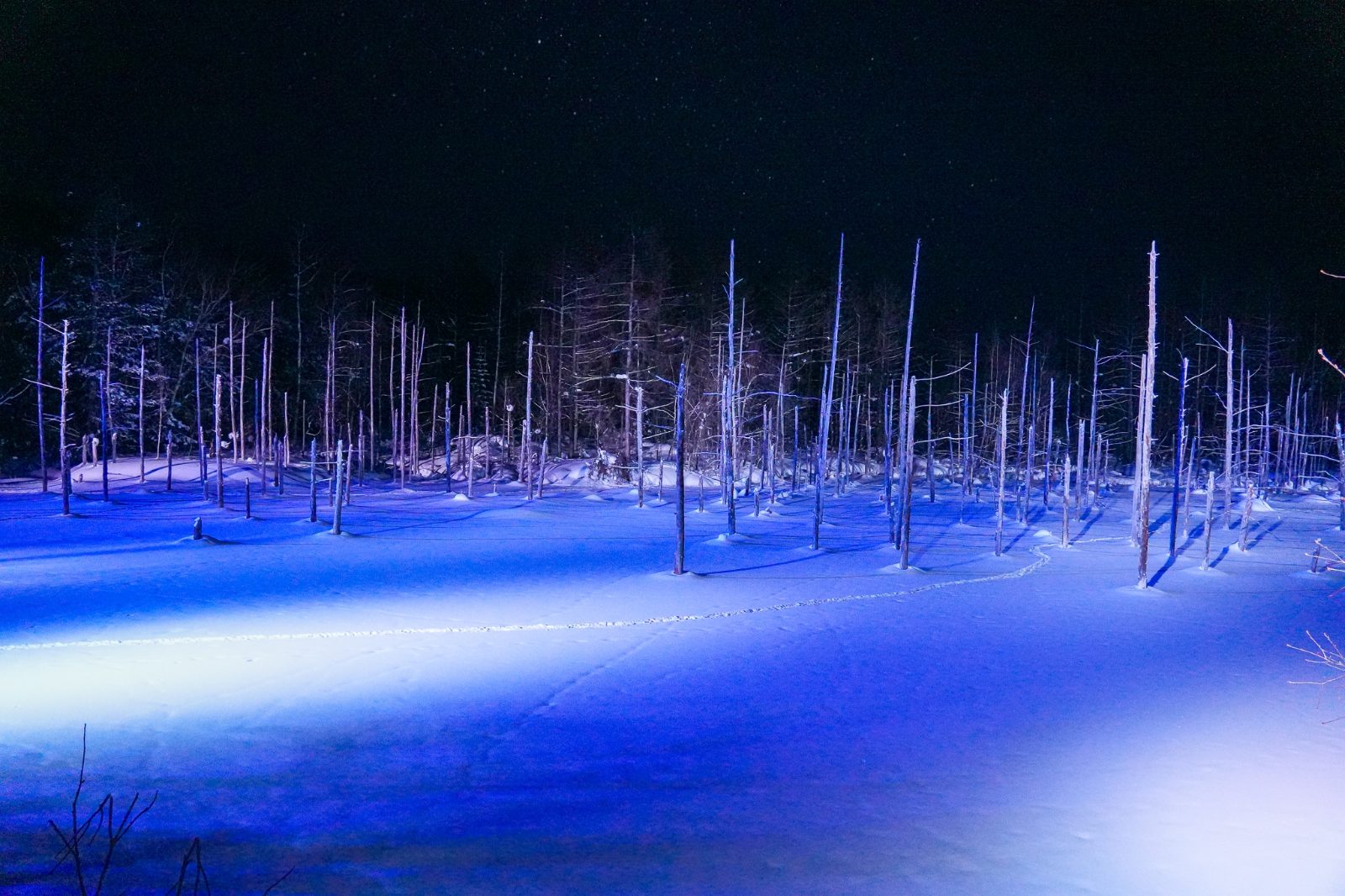
Long before the introduction of the biei blue pond winter illumination, this accidental body of water was already a renowned Hokkaido landmark. Created in 1988 to protect the nearby town from volcanic mudflows following an eruption of Mount Tokachi, the pond is internationally famous for its vibrant colloidal aluminum color during the summer months. However, as the harsh Kamikawa District winter sets in, the famous azure water vanishes completely beneath a thick sheet of ice and heavy snow accumulation. Rather than closing the site during these inhospitable months, local tourism officials embraced the stark, frozen landscape by introducing a nightly light-up event. The installation highlights the dramatic contrast between the pure white snow and the skeletal remains of submerged Japanese larch trees jutting out of the ice. The visual experience is entirely distinct from a static museum display. Programmed LED lights cycle through a carefully choreographed ten-minute sequence designed to mimic different atmospheric conditions and visual themes. The sequence transitions smoothly through various shades, beginning with a stark, icy white that emphasizes the profound cold of the region. It then slowly shifts into a deep, synthetic blue, intentionally recreating the pond's missing summer hue upon the frozen surface. Visitors watching from the elevated wooden viewing platforms often find the shifting, elongated shadows cast by the dead larch trees to be the most compelling aspect of the display. Because the programmed cycle repeats continuously until the grounds close for the evening at 21:30, guests do not need to rush or push their way forward to catch a specific showtime. Navigating the Aoi Ike evening light-up requires strict preparation for severe alpine weather. Temperatures at this elevation near Shirogane Onsen frequently drop well below freezing, and the designated walking paths become severely compacted and slippery under heavy foot traffic. The viewing area consists of a linear path along the pond's edge, meaning dedicated photographers tend to congregate at the most unobstructed vantage points early in the evening. While the area is thoroughly monitored, the darkness surrounding the remote installation makes secure footwear with ice cleats highly recommended for all attendees. For travelers hoping to capture the landscape without battling dense crowds, planning arrival times requires strategic foresight. Understanding the nuances of the terrain and lighting sequences is the core of any comprehensive biei blue pond winter illumination guide, ensuring visitors can safely appreciate the austere beauty of Hokkaido's coldest season without succumbing to the elements.
“The programmed LED sequence begins with a stark, icy white that emphasizes the profound cold of the region before slowly shifting into a deep, synthetic blue.”
The Biei Blue Pond winter illumination typically occurs from November through April, with the best arrival window being 16:30–21:00. This period ensures visitors experience the light patterns after dark when the visual effect is most distinct.
Frequent snowfall, -10°C to -5°C. Cold temperatures are common, so plan for extended exposure to the elements.
Variable conditions, -5°C to 2°C. These months offer a transition between autumn and spring weather patterns.
Conditions vary by nightly weather. Visiting on weekdays reduces congestion compared to weekend light-up viewing.
Verdict: The optimal time to visit is a weekday evening between 16:30 and 21:00 during the core winter months of January and February.
The Biei Blue Pond is open daily with consistent hours throughout the winter illumination season.
Access to the Shirogane Blue Pond is provided at no cost for all visitors. However, travelers arriving by personal vehicle or rental car are required to pay a parking fee.
Verdict: A typical adult pays 0 JPY for entry, with the total cost contingent only on the required parking fee for vehicles.
The Shirogane Blue Pond is located in the Shirogane area of Biei. Access is primarily managed via road travel from Biei Station or through regional bus services.
Dohoku Bus (Shirogane Line) from Biei Station to Shirogane Aoi Ike Iriguchi
Route 966 from Biei town center towards Shirogane Onsen
Direct hire from Biei Station or Furano area
Winter road conditions in Hokkaido require careful driving, so verify tire status if using a rental car. Visitors utilizing public transport should confirm the return bus schedule from the Shirogane Aoi Ike Iriguchi stop before heading to the pond.
Prepare for sub-zero conditions and low-light photography to make the most of your winter evening visit.
Everything you need to know about biei blue pond winter illumination
There is no entrance fee to see the biei blue pond winter illumination, as access to the site remains free for all visitors. However, please note that a parking fee applies for those arriving by private vehicle.
The site maintains consistent daily hours from 08:00 to 21:30 throughout the week. This schedule accommodates those wishing to view the biei blue pond winter illumination in the evening.
The optimal window to experience the biei blue pond winter illumination is between 16:30 and 21:00. Arriving during this period ensures you see the light patterns clearly after dark.
Travelers often utilize local bus services or rental cars from Furano and Biei stations to reach the Shirogane Blue Pond. While private tours are popular, public transit remains a viable option for independent exploration of this landmark.
Public restroom facilities are available near the parking area for visitors exploring the frozen landscape. We recommend preparing for cold temperatures, as the area remains open to the elements.
Yes, the area is open to the public every day from Monday through Sunday. You can plan your trip to see this Hokkaido landmark at your convenience during the designated hours.